

Predictions Our forecasts on Hong Kong’s fiscal situation
Actions Our recommendations

Insights Hear from our tax professionals
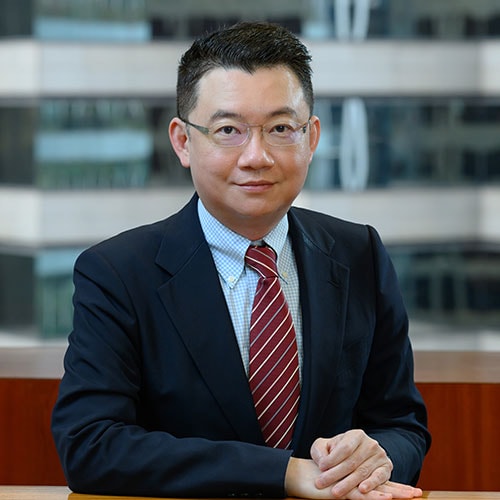
Jeremy Ngai, PwC China South Tax Leader:
“The Government originally forecast a consolidated deficit of HK$67 billion for 2025/26. PwC’s anticipation of a much smaller consolidated deficit of HK$0.2 billion, close to breakeven, demonstrates the Government’s commitment to securing Hong Kong’s economic future. By positioning Hong Kong as a global gateway, particularly to support Chinese Mainland enterprises’ outbound strategies, and by pritorising talent and investment attraction, the Government is unlocking opportunities and paving the way for a prosperous future.”
Rex Ho, PwC Asia Pacific Financial Services Tax Leader:
“Hong Kong’s position as a leading hub for capital markets and asset management is vital for our economic future. Stamp duty exemption for market intermediaries and tax neutrality on securitisation programmes will promote growth and position Hong Kong as a leading centre for securitisation. Promoting the internationalisation of RMB through tax incentives for RMB-denominated products will diversify financial offerings, while tax concessions for gold traders and investors in gold investment products will solidify Hong Kong’s role as a gold trading centre. In addition, fostering collaboration between HKEx and Middle Eastern exchanges will position Hong Kong as a leading trading platform for Islamic financial products, opening new opportunities for the city’s financial sector.”

Agnes Wong, PwC China South Private Clients and Family Office Tax Leader:
“To solidify Hong Kong’s status as a leading international shipping centre, the Government should pair its stepped-up promotion of tax concessions with swift implementation of the enhanced maritime tax concessions, thereby strengthening competitiveness against jurisdictions such as Singapore, while also expediting the introduction of the proposed half-rate tax concessions for commodity trading we have long championed.”
“The Government’s initiatives are centred on transforming Hong Kong into a prime destination for family offices and high-net-worth individuals. To strengthen its appeal to global talent and investors, the New Capital Investment Entrant Scheme should raise the cap on residential property counted toward the investment threshold from HK$10 million to HK$15 million, aligning it with non-residential property. Accelerating Hong Kong residency status for principals of eligible family offices and their families, alongside streamlined visa applications and non-tax incentives, such as child education allowances and cash bonuses, will further support the Government’s goal of attracting and retaining both family office principals and professionals.”
“Support for working families includes subsidies for daycare services and tax deductions for hiring domestic helpers and caretakers. Extending tax deductions for elderly residential care to include costs incurred in the Chinese Mainland acknowledges the cross-boundary caregiving responsibilities faced by many families. Offering a 100% tax reduction for profits tax, salaries tax, and tax under personal assessment—subject to a cap—demonstrates our commitment to alleviating financial pressures.”
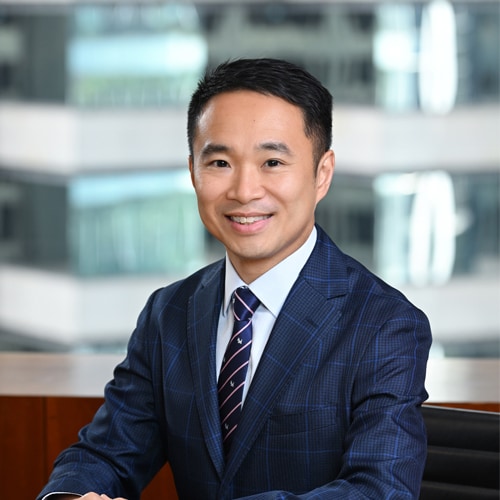
Kenneth Wong, PwC Hong Kong Tax Controversy Services Leader:
“PwC recommends enhancing the existing R&D tax incentives to drive technological advances, particularly in respect of payments for outsourced R&D activities undertaken in the Greater Bay Area. A 150% enhanced tax deduction for enterprises investing in AI technologies can be transformative, encouraging innovation and digital transformation. Our vision extends to strengthening Hong Kong as an international trade centre, where targeted tax incentives for global traders, including e-commerce and gaming sectors, can reinforce our competitive advantage.”
“To bolster Hong Kong’s global status, we propose a half-rate tax concession for regional headquarters that engage in specific activities while maintaining adequate economic substance. Expanding Hong Kong’s tax treaty network and strengthening international collaboration with key jurisdictions across ASEAN, Latin America, and Belt and Road regions is essential. Leveraging Hong Kong’s role as a super-connector bridging the Chinese Mainland and global markets will unlock new opportunities and reinforce its position as a competitive international business centre.”
Hear from our other industry professionals

Albert Wong, PwC Hong Kong Public Sector Consulting Partner
“Accelerating the Northern Metropolis as a dynamic hub for AI, life sciences, the low-altitude economy, and advanced manufacturing will ignite fresh growth engines and diversify revenue streams. The launch of Hung Shui Kiu Industry Park Company Limited – the inaugural ‘Park Company’ in the Northern Metropolis – offers a powerful catalyst to drive this vision forward. By strategically aligning land premiums and rental rates, the Government can strike the optimal balance between immediate fiscal returns and long-term economic benefits. In addition, the Government can consider exploring innovative risk-sharing models with tenants, such as revenue-sharing agreements that lower rents during the critical early stages, to stimulate private sector investment and foster sustainable growth.”

James Lee, PwC China Consulting AI Leader
“To advance the development of Hong Kong’s vibrant AI ecosystem, the Government should accelerate AI-enabled efficiency across public services through broader deployment of AI across government agencies. An AI efficacy enhancement programme for the Financial Services and the Treasury Bureau’s internal operations could focus on three core areas in smart automation, intelligent research and analysis assistant, and multimodal knowledge management. Wider adoption of AI across bureaux and departments would modernise public service delivery and underpin Hong Kong’s broader AI strategy in an innovation driven economy.”

Jackie Yan, PwC China Economist
“With the operating account expected to return to surplus but structural pressures persisting, Hong Kong should maintain strict discipline over recurring expenditure and remain fully committed to the Reinforced Fiscal Consolidation Programme. To address a near term capital account deficit, prudent use of Hong Kong’s low government debt level to issue diversified bonds can fund major capital projects, with bond issuance serving not only to bridge the financing gap but also as a strategic lever to support long term growth and fiscal resilience.”
Get notified about 2026/27 Hong Kong Budget
Subscribe to our tax insights and events
Looking back at 2025/26 Hong Kong Budget
Our responses and analysis for last year’s Budget
Talk to our professionals



Contact us
Follow us


